 What's on
 Things to Do
 Plan your Visit
 Media Rules and Filming
𝐏𝐔𝐁𝐋𝐈𝐂 𝐏𝐄𝐓𝐈𝐓𝐈𝐎𝐍𝐒 𝐂𝐎𝐌𝐌𝐈𝐓𝐓𝐄𝐄 𝐏𝐔𝐓𝐒 𝐍𝐀𝐓𝐈𝐎𝐍𝐀𝐋 𝐓𝐑𝐄𝐀𝐒𝐔𝐑𝐘 𝐎𝐍 𝐓𝐇𝐄 𝐒𝐏𝐎𝐓 𝐎𝐕𝐄𝐑 𝐑𝐈𝐒𝐈𝐍𝐆 𝐏𝐔𝐁𝐋𝐈𝐂 𝐃𝐄𝐁𝐓 𝐀𝐍𝐃 𝐑𝐄𝐕𝐄𝐍𝐔𝐄 𝐌𝐎𝐁𝐈𝐋𝐈𝐒𝐀𝐓𝐈𝐎𝐍






The Public Petitions Committee has put the National Treasury to task over the country's escalating public debt, seeking accountability on the measures being implemented to increase domestic revenue collection and reduce reliance on borrowing.
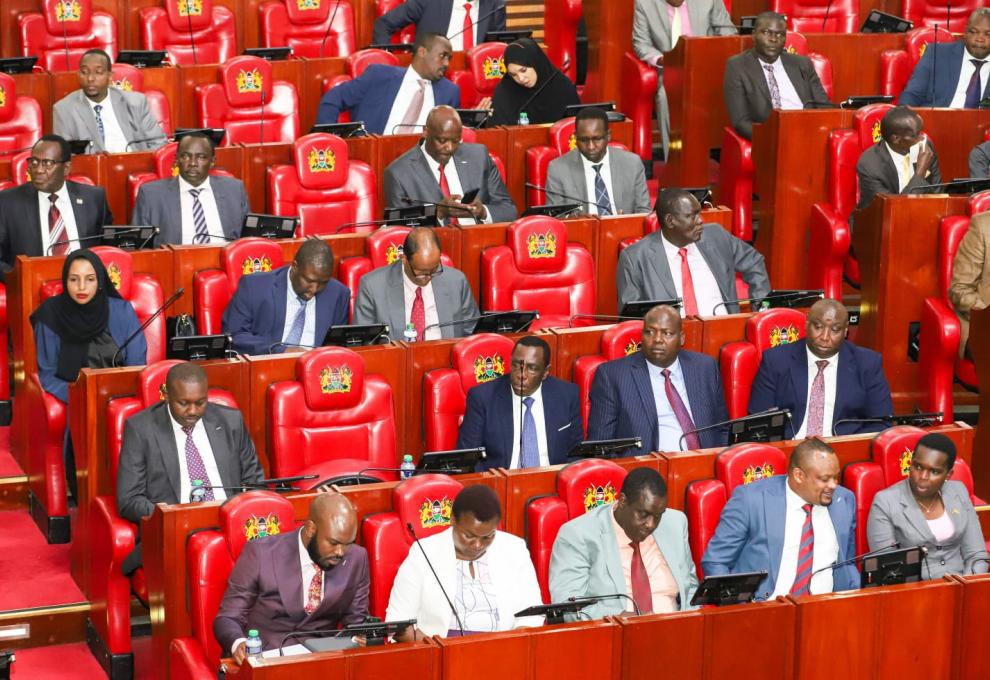
The Committee raised the concerns during a meeting with officials from the National Treasury, who appeared before Members to respond to Public Petition No. 10 of 2026 on strengthening oversight, transparency and intergenerational equity in public debt governance.
Appearing before the Committee, the Director General of the Public Debt Management Office at the National Treasury, Mr. Raphael Owino, maintained that the Treasury has substantially addressed the prayers sought by the petitioners.
However, he acknowledged that although the Treasury conducts Pre-Budget Public Forums during the preparation of the Budget Policy Statement (BPS) and the Medium-Term Debt Management Strategy (MTDS), there is still room to improve public communication on debt management by making it more accessible and easier for Kenyans to understand.
"The National Treasury acknowledges that public communication on debt management can be made more accessible and commits to exploring simplified summaries of the MTDS, Monthly Bulletin and Annual Public Debt Report targeting all Kenyans, including civil society and county-level audiences. The Petitioners’ concern about youth exclusion from fiscal discourse is well-taken as a policy aspiration."
"In addition, the National Treasury has initiated the digitization of the public debt payment process as part of its broader public financial management reforms. The initiative seeks to automate key debt servicing workflows, reduce manual processing, strengthen internal controls, improve payment accuracy and timeliness, and enhance transparency and accountability in the management of public debt obligations," said Mr. Owino.
Committee Chairperson Hon. Muchangi Karemba (Runyenjes) sought the Treasury's assessment of the country's current debt position, noting that concerns raised by young petitioners and previous submissions by the Controller of Budget point to continued growth in public borrowing.
"When the young people appeared before us, they said they do not want a situation whereby government borrows more or acquires a lot of debt at the expense of not just them but also the future generation. And when the Controller of Budget appeared before us, she informed us that every year we borrow more. What is your take on our current situation? Because the feeling out there is that indeed we are not in a good space?" asked Hon. Karemba.
Responding to the concerns, Mr. Owino admitted that Kenya's debt levels remain high. Still, he assured the Committee that the National Treasury has put in place deliberate interventions aimed at improving the country's debt sustainability.
"We cannot say that we are in a very safe space as far as the debt is concerned, because the level of debt remains very high, and the amount of resources we are spending in servicing debt is very high. To the extent that if that amount were available for development, we would be doing a lot of development activities, far more than what we are doing at the moment," responded Mr. Owino.
"We are doing what it takes to make sure we get the country out of that unsafe space. And we have done several things, starting with what we call the liability management operation that we have been doing since 2024, where we raise funding to prepay the very costly debt that is existing in our debt stock, so that the cost of debt servicing comes down," he added.
The Committee also sought clarification on the strategies being implemented to strengthen domestic revenue mobilisation as a sustainable way of reducing government borrowing.
Vice-Chairperson Hon. Janet Sitienei (Turbo) questioned the Treasury on the specific measures being undertaken to widen the tax base and enhance revenue collection.
In response, Mr. Owino informed the Committee that the government is prioritizing the digitization of revenue collection systems and strengthening compliance by identifying individuals and businesses that are not remitting the taxes due.
"The Kenya Revenue Authority currently is using very outdated systems that do not capture the economy the way it is. So this is why the agenda of digitization at KRA is very strong, such that you have a modern system that can cover all the businesses, including the digital operations that are in the country, so that all those people who are earning reasonable income, instead of only targeting the people who have been in the tax bracket, should also contribute to the taxation," said Mr. Owino.
"There are areas where we have a lot of potential and the collection is very low, like the rental income tax. So what we are doing is to make sure that now we work with the utility companies such as Kenya Power to make sure that we know the people who own large properties but are not paying the rental income, so that they are brought into the tax bracket. We are also working with institutions such as the NSSF, for example, to find out who is contributing to NSSF but is not paying Pay As You Earn (PAYE)," he added.
The Committee noted that the ongoing stakeholder engagements are intended to gather diverse views on the petition before compiling its findings and recommendations. The Public Petitions Committee is expected to continue receiving submissions from relevant stakeholders before tabling its report in the House.