 What's on
 Things to Do
 Plan your Visit
 Media Rules and Filming
𝐏𝐀𝐑𝐋𝐈𝐀𝐌𝐄𝐍𝐓 𝐔𝐑𝐆𝐄𝐃 𝐓𝐎 𝐋𝐄𝐀𝐃 𝐓𝐇𝐄 𝐅𝐈𝐆𝐇𝐓 𝐀𝐆𝐀𝐈𝐍𝐒𝐓 𝐌𝐄𝐓𝐇𝐀𝐍𝐄 𝐄𝐌𝐈𝐒𝐒𝐈𝐎𝐍𝐒


Parliament has been urged to take a leading role in climate management and environmental conservation as experts warn that rising methane emissions continue to pose a serious threat to Kenya’s economy, agriculture and public health.
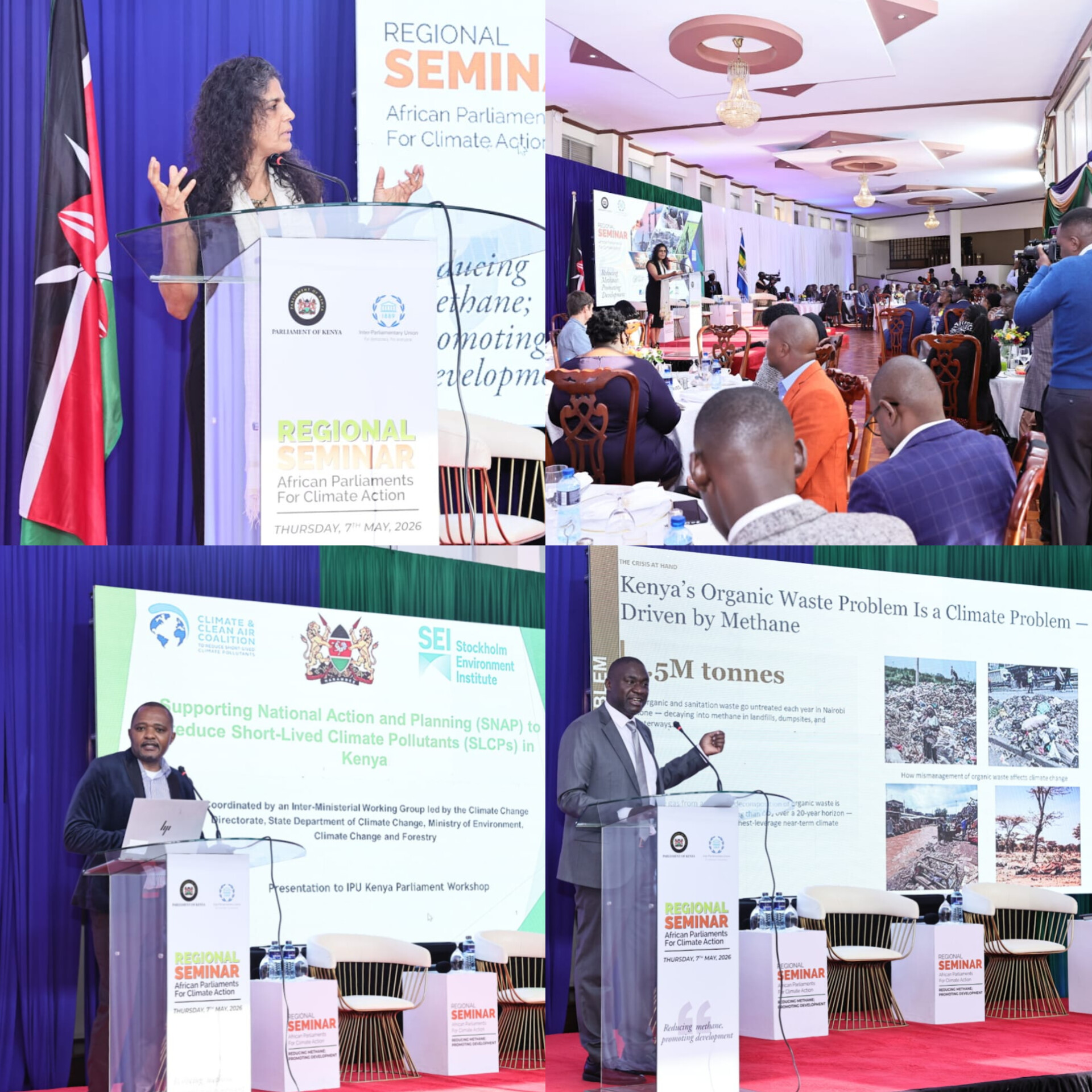
Development partners and climate stakeholders made the appeal during a Media Breakfast Dialogue on Methane Emissions in Kenya, where speakers stressed that Lawmakers have a critical responsibility in ensuring the implementation of policies and legislation aimed at reducing pollution and mitigating climate change.
Speaking during the forum, Dr Sheilla Aggarwal, Director of the Industry and Economic Division at United Nations Environment Programme, said methane pollution has already had devastating effects on the country, particularly in agricultural production and human health.
She called on Parliament to provide strong leadership by supporting and implementing measures that would safeguard the environment and shield the country from the devastating effects of climate change.
Dr Aggarwal noted that climate action should not only be viewed as an environmental obligation but also as an economic opportunity capable of improving livelihoods and driving sustainable development.
“Reduction of methane emissions can lead to economic redemption in the country and globally,” submitted Dr Aggarwal.
She observed that failure to address methane emissions could worsen food insecurity, increase health complications and expose millions of Kenyans to climate related disasters such as droughts and floods.
Also addressing the meeting was Mr Anderson from the Centre for International Forestry Research and the International Centre for Research in Agroforestry, who emphasised that decisions made by policymakers today would significantly shape the future of climate action.
He warned that Kenya remains highly vulnerable to the effects of climate change and called for a united approach among government institutions, Parliament, development partners and the private sector to ensure effective implementation of emission reduction measures.
According to Dr Anderson, pollution continues to claim thousands of lives annually. He revealed that statistics from 2019 showed that approximately 5,000 deaths were recorded in Kenya as a result of pollution, while globally the figure stood at about 1.1 million.
He cautioned that unless urgent interventions are undertaken, the number of pollution related deaths in Kenya could rise sharply to 25,000 by the year 2050.
The climate expert therefore appealed to Members of Parliament to support policies and programmes aimed at reducing pollution and promoting sustainable environmental management practices across the country.
On his part, Mr Michael Lwoyelo, Managing Director of Regen Organics, said the growing challenge of organic waste disposal has become a major climate issue that requires urgent intervention.
He explained that poor management of organic waste has significantly contributed to greenhouse gas emissions, worsening climate change and increasing the occurrence of floods, disease outbreaks and other environmental disasters.
Mr Lwoyelo stressed the need for collaboration between Parliament, government agencies, private sector players and environmental stakeholders in order to ensure compliance with environmental regulations and sustainability measures.
He further urged Lawmakers to carefully assess environmental implications before approving development projects and to support initiatives aimed at promoting adherence to environmental standards.
Their submissions were echoed by Dr Claudia Arndt of the International Livestock Research Institute, who emphasised the urgent need to implement practical interventions to conserve the environment and reduce methane emissions.
According to Dr Arndt, methane has a far greater warming effect than carbon dioxide despite remaining in the atmosphere for a shorter period, making it one of the most dangerous greenhouse gases contributing to global warming.
She appealed to all stakeholders to embrace measures aimed at reducing methane emissions and called upon the Media to play a frontline role in educating the public on the importance of environmental conservation. Dr Arndt further challenged Parliament to work closely with climate stakeholders in addressing the numerous environmental and health challenges arising from pollution and climate change.